
Introduction
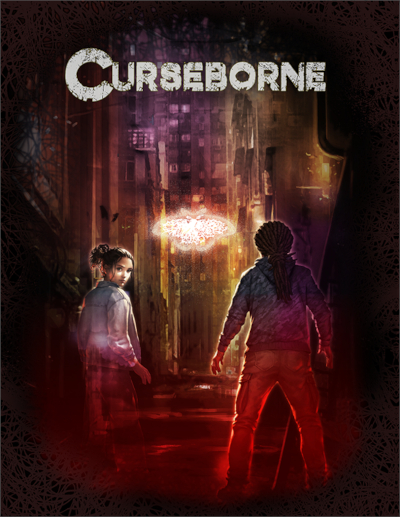
In a landscape saturated with tabletop roleplaying games that promise to redefine the genre, Curse Borne Core Rulebook, hereinafter ‘Curseborne’ (which can be found at:
arrives not with a gentle whisper but with a visceral roar. Published by Onyx Path Publishing and designed by the industry veteran Travis Legge, ‘Curseborne’ is a modern horror game that wears its influences on its sleeve while carving out its own distinct and bloody niche. It dares to ask:
What if you were the monster, but not by choice? What if the power coursing through your veins was a parasitic curse, a source of immense ability and inescapable damnation?
This is the core conceit of ‘Curseborne’: you play one of the Cursed, individuals who have made a pact with a malevolent, otherworldly entity known as a Patron, gaining supernatural powers at the cost of their humanity and sanity.
The game immediately sets itself apart from its contemporaries. Where games like ‘Vampire: The Masquerade’ focus on the political and social machinations of the undead, and ‘World of Darkness’ chronicles the slow descent into monstrosity, ‘Curseborne’ is more intimate, more personal, and arguably more desperate. It’s a game about the struggle for survival against a world that fears you, a Patron that covets you, and a curse that devours you from within. The ‘Curseborne Core Rulebook’ is the key to unlocking this world, and it does so with a slick, presentation-focused design and a system that blends narrative freedom with mechanical crunch in a compelling, if sometimes complex, package.
Review
System and Mechanics: The Price of Power
At its heart, ‘Curseborne’ uses a modified version of the Storypath system, which will feel familiar to fans of Onyx Path’s ‘Trinity Continuum’ or ‘Scion’. The core mechanic is a dice pool system where players roll a number of ten-sided dice equal to their Attribute + Skill. Each die that rolls an 8, 9, or 10 counts as a success, with 10s “exploding” (allowing you to roll them again and add the successes). The number of successes you achieve determines the degree of your success.
However, the true soul of the system lies in its unique mechanics that reinforce the theme of being cursed.
- The Curse Die: Every roll a player makes includes an extra “Curse Die.” While this die can generate successes like any other, it also has a chance to trigger a Complication. This constant, looming threat on every single action is a stroke of genius. It makes every choice feel weighted and dangerous, as even the simplest task could spiral into a supernatural disaster. You might be trying to hotwire a car, only for your Curse Die to trigger a Complication that causes the streetlights to explode and attracts the attention of a rival Cursed.
- Dramatic Editing and Momentum: The system is rich with player-facing resources. Momentum, gained from taking Complications or rolling exceptionally well, can be spent to add dice to pools, create environmental advantages, or fuel certain abilities. Dramatic Editing is a more potent resource that allows players to directly alter the narrative in small ways, introducing a helpful NPC or finding a crucial clue. These mechanics empower the players to influence the story, making them active co-authors of their own horror saga.
- The Cursed Lifestyles: This is where character creation truly shines. Instead of rigid classes, players choose a “Lifestyle” that defines their curse. These are not just character archetypes; they are entire frameworks for play. You could be a Fleshwarper, whose body is a malleable horror of bone and sinew; a Gloom-caller, who commands shadows and fear; a Havoc, a walking conduit of chaotic energy; or a Scythe, an assassin who can phase through walls and manifest spectral blades. Each Lifestyle comes with its own unique set of powers (called “Curses”), a relationship with its Patron, and a specific flavor of horror. This system provides immense flexibility and ensures that every Cursed character feels fundamentally different in play.
Setting and Tone: A World of Shadows
The setting of ‘Curseborne’ is a dark reflection of our own world. It’s not a post-apocalyptic wasteland or a hidden fantasy realm; it’s the world just outside our window, but with the supernatural bleeding through the cracks. The “Veil” is thin, and monstrous things lurk in the shadows, prey on the vulnerable, and vie for power in secret.
The core rulebook does an excellent job of establishing this atmosphere. The writing is evocative, grim, and focused on the personal horror of the Cursed. It delves into the nature of the Patrons – ancient, incomprehensible entities from beyond the Veil who grant power in exchange for service and suffering. These Patrons are not benevolent; they are cosmic parasites, and their relationship with the Cursed is one of master and slave, or abuser and victim.
The book provides a solid foundation for a variety of stories: desperate survival, urban investigation, political intrigue between Cursed factions, or even a tragic attempt to find a cure. The focus remains tightly on the Cursed and their immediate struggles, which is a strength. It avoids getting bogged down in a sprawling metaplot, instead giving Storyguides (the game’s term for GMs) the tools and the freedom to craft their own unique nightmares.
Presentation and Layout: Polished and Professional
Onyx Path has a reputation for high production values, and ‘Curseborne’ is no exception. The book is a beautiful, full-color hardcover. The art is consistently excellent, ranging from hauntingly beautiful illustrations of Cursed characters to visceral, body-horror imagery that perfectly captures the game’s tone. The layout is clean, intuitive, and easy to navigate. The use of call-out boxes, clear headings, and a well-organized index makes finding specific rules or setting information a breeze, which is a significant plus in a game with this many interconnected mechanics.
Critique: Where the Curse Shows
No game is without its flaws, and ‘Curseborne” has a complexity that can be a double-edged sword. The interplay between Momentum, Dramatic Editing, the Curse Die, and the various Curses can feel a bit overwhelming for new players or Storyguides. There are a lot of moving parts to track, and while they all serve the theme, there’s a learning curve that is steeper than in more narrative-first games like ‘Monsterhearts’.
Furthermore, while the setting is evocative, some groups might find it a bit sparse. The book provides the “what” and the “how” of the world, but Storyguides looking for a detailed world with pre-written locations, factions, and plot hooks will need to do a significant amount of prep work. ‘Curseborne’ gives you a terrifying sandbox and the tools to play in it, but it doesn’t build the sandcastles for you.
Conclusion
The ‘Curseborne Core Rulebook’ is a triumph of modern horror TTRPG design. It successfully marries a deeply personal and terrifying theme with a robust, engaging mechanical system. The constant tension of the Curse Die, the creative freedom of the Lifestyles, and the player-centric resources make for a dynamic and memorable gameplay experience. While its complexity might be a barrier for some and its setting requires a proactive Storyguide to truly come alive, these are minor quibbles in an otherwise outstanding package.
If you are looking for a game that puts you in the shoes of a struggling, powerful, and damned monster, ‘Curseborne’ is an essential addition to your collection. It is a game about fighting for your soul with the very claws of your damnation, and in that brutal, beautiful struggle, it finds its unique and compelling voice. It is a sharp, ambitious, and horrifyingly good time at the table.